Assign one clear storage job
A bench, ottoman or window seat can become a vague promise to solve clutter. Give it a narrower task before choosing its size. Spare bedding needs a broad opening and a dry, suitable environment. Board games need an internal shape that fits their boxes without repeated unpacking. Entryway accessories need frequent, uncomplicated access. These are different storage problems. A piece that handles one well may be a poor place for the others, even when its advertised capacity sounds generous.
Measure the actual items, including any containers used to keep them organised. External dimensions do not reveal the clear opening or the usable cavity. Hinges, support arms, internal braces and upholstery can reduce the space available. A deep box also makes the bottom harder to reach. Think about the weight of the object you will lift while leaning over the edge. Filling every corner is not a useful goal if retrieving one item requires emptying the whole seat onto the floor.
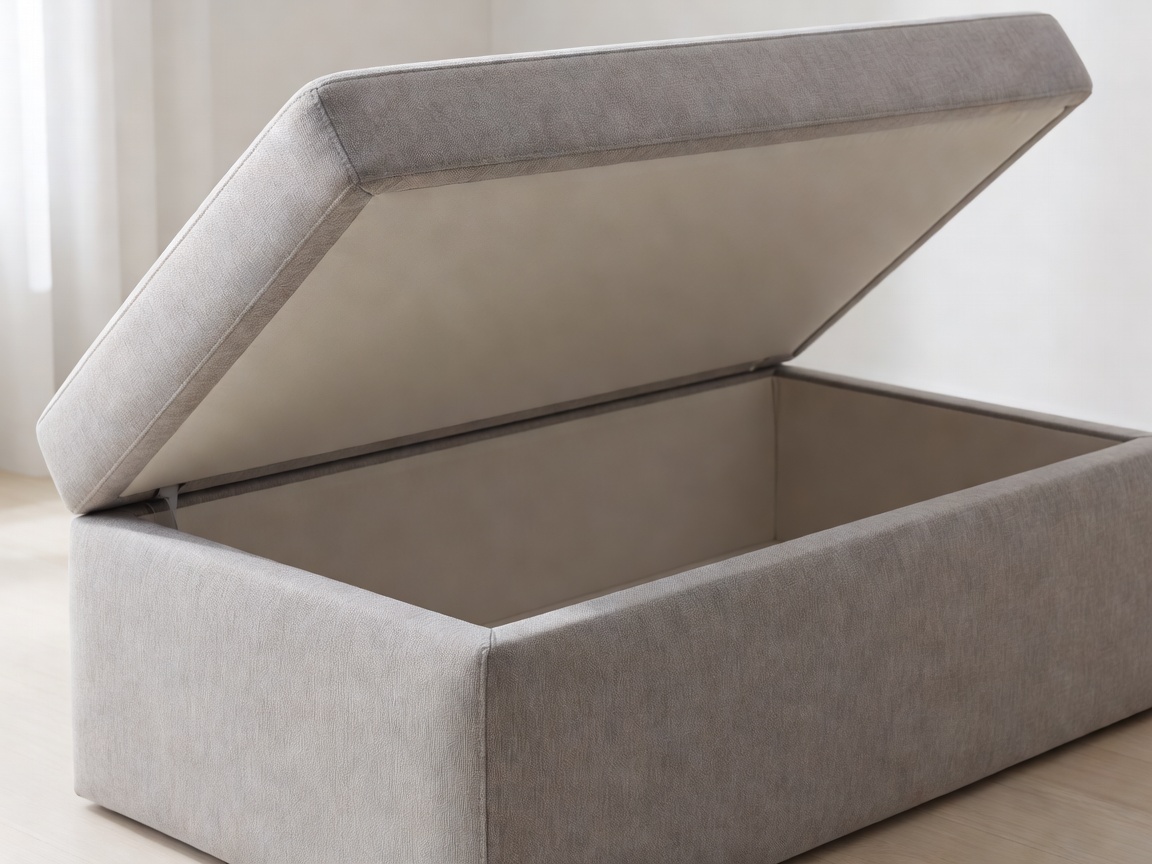
Rehearse access while the room is occupied
Imagine the seat in use. A storage bench beneath a dining table may be comfortable enough for a meal, yet awkward to open while someone else remains seated. A loose-lid ottoman needs a landing place for the lid. A hinged seat can require clearance from the wall, a curtain or a nearby shelf. Decide where cushions and decorative throws go during access. The objects placed on top can quietly turn convenient storage into a chore.
Match access frequency to the position of the piece. Things used every morning should not require moving the whole bench. Occasional guest bedding can tolerate a less immediate route, provided the retrieval remains safe and manageable. If the seat lives near an entrance, check that an open lid or drawer does not obstruct the door. A layout that works when the home is empty may be less forgiving when someone arrives carrying bags while another person searches for a scarf.
storage cavity
and reaching position
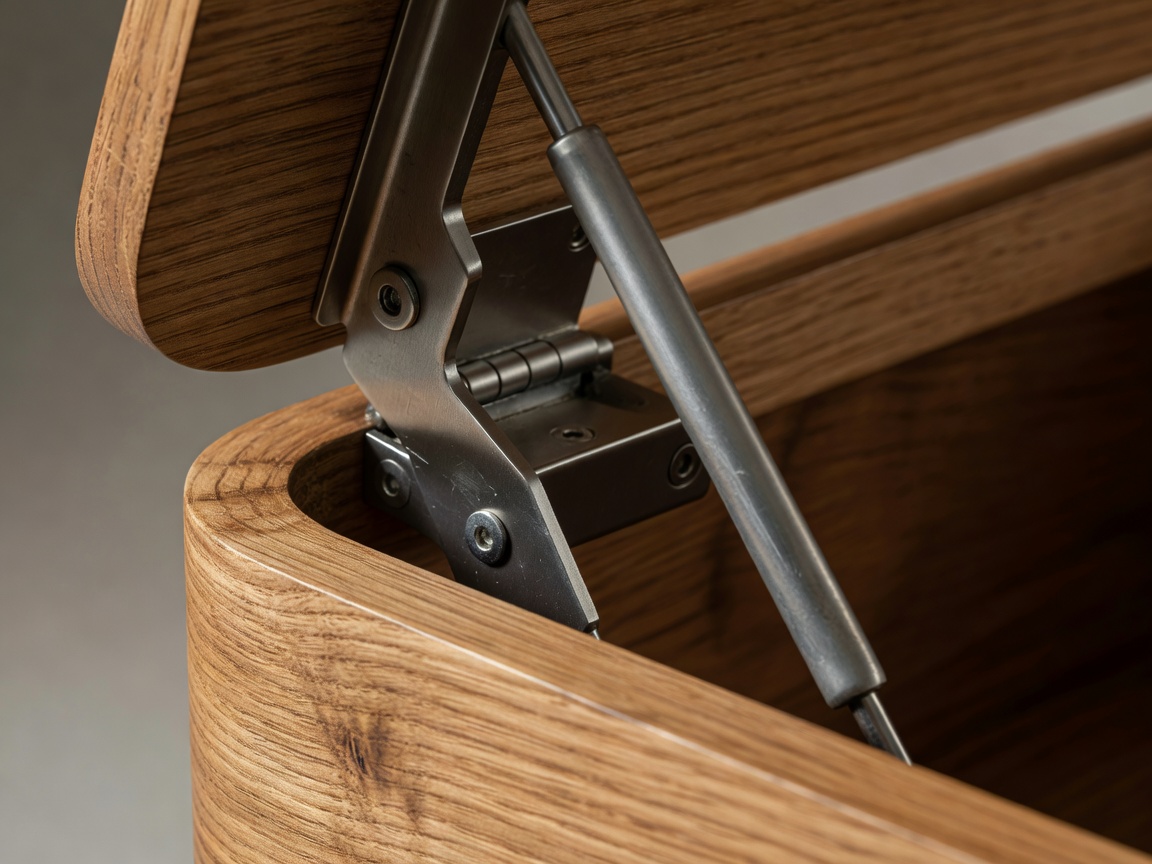
Treat the lid as a moving component
Ask how the lid is supported while the compartment is open. A soft-closing hinge describes a closing behaviour; it does not automatically mean that the lid will remain safely raised or that fingers cannot be trapped. Follow the manufacturer’s instructions and warnings, especially in homes with children. Do not rely on an improvised prop. Storage compartments are not play spaces, and an attractive cavity should never be treated as a safe place for a child or pet to hide.
Look for the product’s intended seating use and separate load information for the seat and storage base. A decorative chest is not necessarily designed to support a person. Likewise, a bench rated for sitting is not a step stool. Inspect the base, feet and any prescribed wall attachment. If hardware is loose, a support no longer holds as intended or a lid drops unexpectedly, stop using the affected function and seek appropriate repair advice from the supplier.
Keep the seat useful after filling it
Sit on the piece before concentrating on the compartment. Entryway seating needs to support the act of putting on shoes; dining seating needs to suit the table; an ottoman used as a footrest does not automatically make a good prolonged seat. Notice height, edge firmness and whether the lid shifts under normal intended use. Avoid solving a storage problem by introducing an uncomfortable perch that nobody wants to use. The two functions should support one another rather than compete.
Storage also changes the weight and cleaning routine of the piece. Decide whether it will remain stationary or be moved, and consult the instructions before moving it while loaded. Keep damp textiles out of enclosed storage and follow material care guidance. Ventilation requirements depend on the design and contents, so do not assume an upholstered cavity behaves like an open shelf. A removable liner may ease cleaning, but it is not a substitute for dealing with the source of moisture or dirt.
| Record | Source | Decision it supports |
|---|---|---|
| Internal width, depth and height | Product drawing or direct measurement | Whether the intended contents fit |
| Clear opening and hardware intrusions | Inspection and instructions | Whether items can pass through |
| Seat height and usable seat depth | Model specification | Comfort for the intended activity |
| Open-lid height and required clearance | Operating instructions | Wall, shelf and curtain conflicts |
For evidence questions, EN 14749 covers domestic and kitchen storage units within its scope, while EN 12520 concerns domestic seating. A multifunctional product can raise questions relevant to both without every requirement applying identically. Ask the supplier what was assessed. The US Consumer Product Safety Commission also publishes recall information worth checking when buying used furniture. A tidy appearance is not evidence of a safe mechanism or an appropriate seating structure.