Choose the everyday state first
Start with the way the table will stand on a normal day. Perhaps it is a narrow breakfast surface, a desk used between meals or a small dining table beside a kitchen. Look at the circulation around that everyday outline before considering the largest possible extension. A table that is slightly inconvenient throughout the week can remain inconvenient even if it performs beautifully at a dinner party. The compact state should earn its place on its own terms.
Now name the occasional transformation. An extending table adds surface area; a drop-leaf table raises a hinged section; a gateleg design moves a support beneath a leaf. A lift-top coffee table changes the position of its surface but is not automatically an appropriate dining table or a full-time workstation. Avoid grouping these mechanisms together as interchangeable space-saving solutions. Each creates a different relationship between the tabletop, the supports, the user’s knees and the surrounding room.
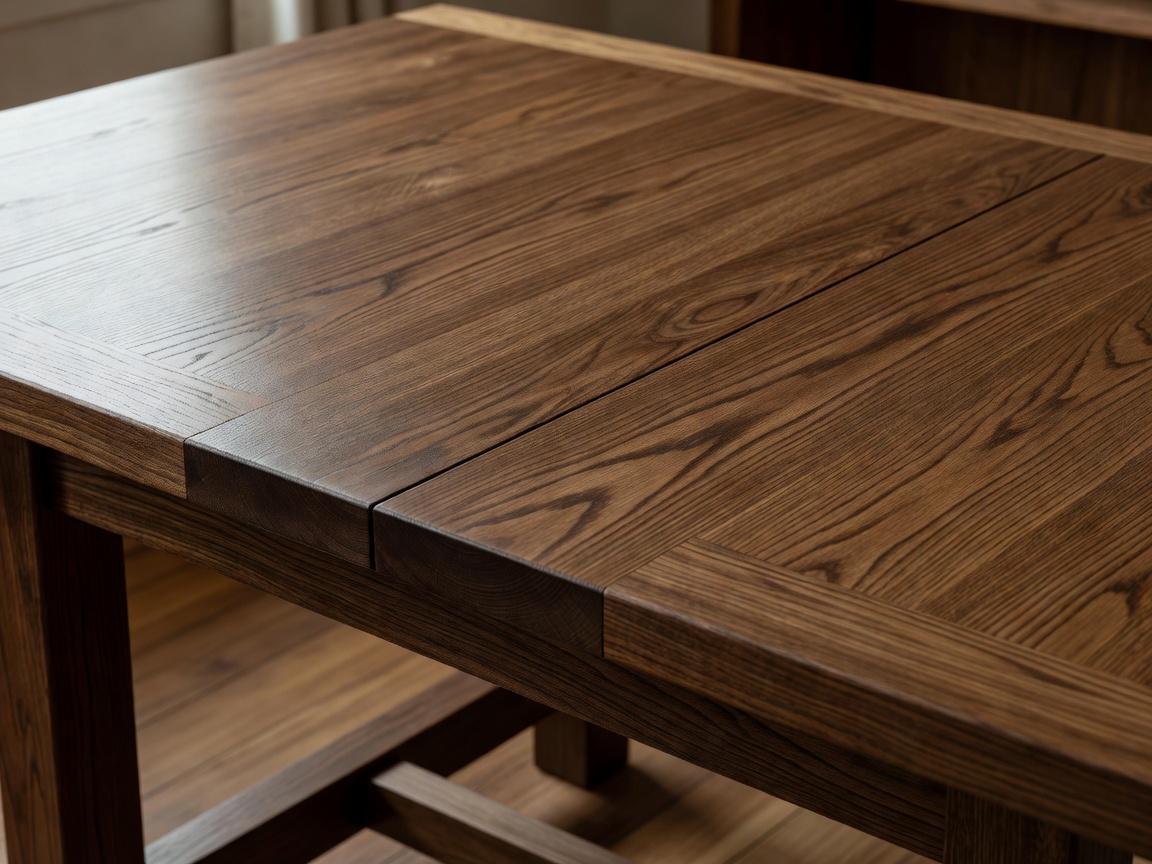
Measure people, not just the top
A plan drawing of the extended surface is only the beginning. Put chairs where people would actually sit and check the legs, aprons and extension supports beneath the table. A nominal seating count does not explain whether a chair aligns with a table leg or whether an armrest prevents it from tucking in. Use the dimensions of the chairs you own or intend to buy. Test getting into the seat as well as sitting still once someone has moved everything into position.
Consider the surrounding activity during a meal. Someone may need to open a cupboard, carry a serving dish or leave the table while another person remains seated. There is no single clearance number that suits every room, mobility need and chair design. Rehearse the likely movements with a temporary floor outline and real chairs. Keep essential routes clear, and be cautious about a layout that works only when everyone agrees not to move at the same time.
tabletop
and support position
Follow the leaf from storage to service
Ask where every extension component lives. A self-storing leaf can reduce the need for a separate cupboard, but its folding action may occupy knee space or require an extra stage of handling. A removable leaf needs a protected storage position and a safe way to carry it to the table. Do not assume that leaning it behind a door will protect the finish or preserve a clear route. Check the manufacturer’s guidance on storage orientation and environmental conditions.
Watch the complete extension sequence, including release catches, alignment points and final locks. Establish whether one person may operate it or whether the instructions require help. Clear the tabletop before moving it unless the manufacturer explicitly permits otherwise. Never use a loaded surface to test how smoothly the mechanism works. With a drop-leaf or gateleg design, confirm that the support is fully positioned before placing anything on the raised section. A leaf that looks horizontal is not necessarily secured.
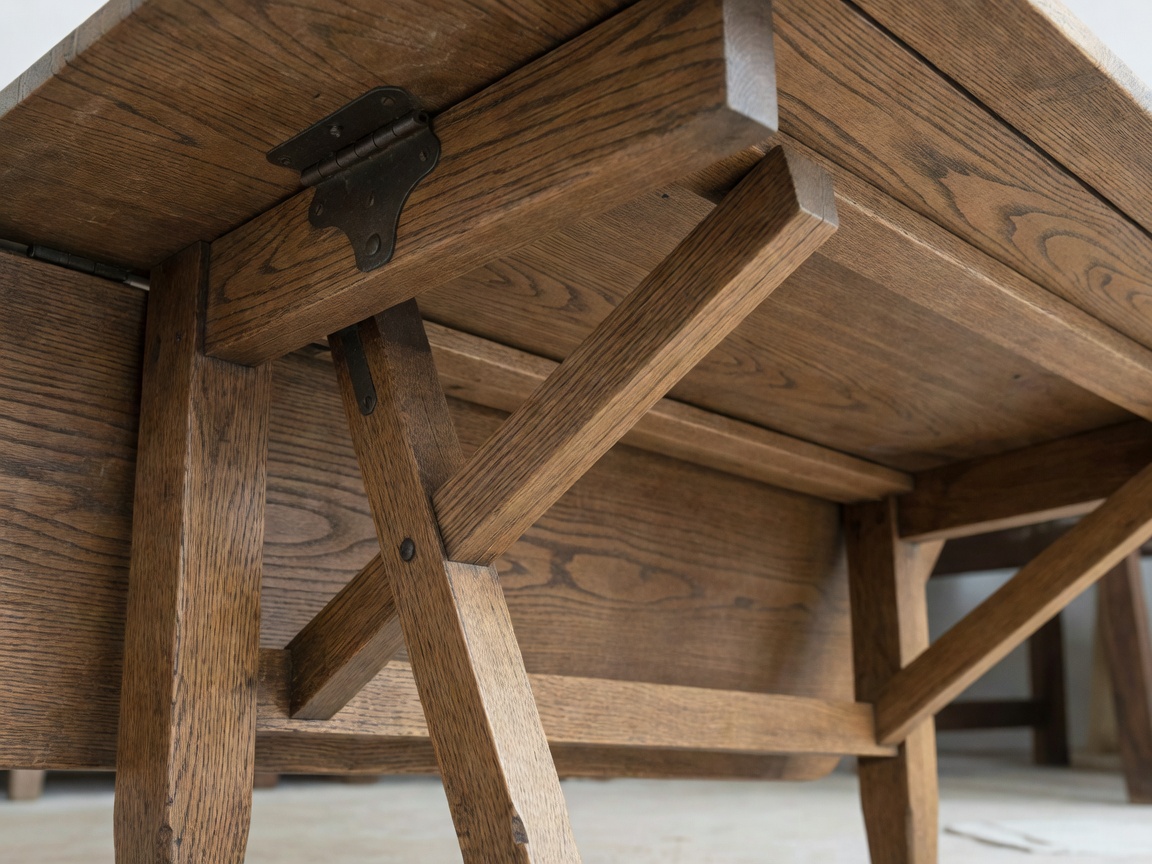
Check stability in every intended mode
A stable compact table does not tell you everything about the extended configuration. Ask the supplier for the relevant load limits and any restrictions on where weight may be placed. A raised coffee-table surface can have different limits from the main body. Do not sit or stand on a table to improvise a stability test. EN 12521 addresses strength, durability and safety requirements for domestic tables; a supplier’s claimed conformity should relate to the actual product and relevant configuration, not merely to a similar model.
Look for practical maintenance information. Can alignment be adjusted using the documented method? Are replacement catches, glides or hinges available? Does the finish require protection from heat and moisture? A table may move less smoothly if it is assembled incorrectly or stands on an uneven floor, so investigate the cause instead of forcing the mechanism. For a used table, missing hardware and an absent manual deserve attention before the piece becomes the setting for a crowded meal.
| Dimension or condition | Record from | Check against |
|---|---|---|
| Closed and extended top dimensions | Product drawing | Both room arrangements |
| Height and clear space beneath the apron | Specification and inspection | Chair arms and seated posture |
| Leaf size and storage position | Operating instructions | Accessible protected storage |
| Required operating space | Demonstration and instructions | Where the operator stands |
Finally, run the room backward. Remove dishes, return chairs, release the catches and put the table into its everyday state. Decide where extra seating belongs between gatherings. The best adaptable table does not merely make a larger surface possible; it makes returning to an ordinary room straightforward enough that you will actually do it.