Begin with an ordinary evening
Before looking at the bed, sit on the sofa as you would at home. Put your feet on the floor, lean back and notice whether the seat depth suits you. A mechanism hidden beneath the cushions can influence their height and firmness, but construction varies widely. Do not assume that a thick-looking cushion means generous support or that a shallow frame means poor comfort. Your normal seated posture is the first test, not a quick press with one hand.
Then describe the sleeping job honestly. A guest staying occasionally, a teenager sleeping every night and two adults sharing the bed have different priorities. Check the stated sleeping dimensions, intended use and supported load for the exact model. Mattress thickness alone is not a reliable measure of comfort. The supporting deck, any joins across the sleeping surface and the available width all matter. If possible, lie down in your usual position rather than judging the unfolded bed from beside it.

Trace the entire opening path
Different mechanisms occupy different kinds of space. A pull-out frame advances into the room; some backrests rotate or require clearance behind the sofa; other designs move cushions and bases together. These descriptions are categories, not guarantees about a particular product. Ask for the complete opening sequence and the manufacturer’s clearance drawing. Include any gap needed to reach a handle, stand beside the frame or lower a section without trapping your hand.
Mark the closed and open outlines on the floor with removable tape, after checking that the tape will not damage the finish. Add the coffee table, nearby chair and route to the door. Now rehearse where those objects go. Moving a light table once a month may be acceptable; lifting a heavy one every night may not be. Pay special attention to a bed that fits only when a door cannot open fully. A successful footprint does not justify obstructing an essential route.
at rest
plus operating space
Feel the effort, then inspect the support
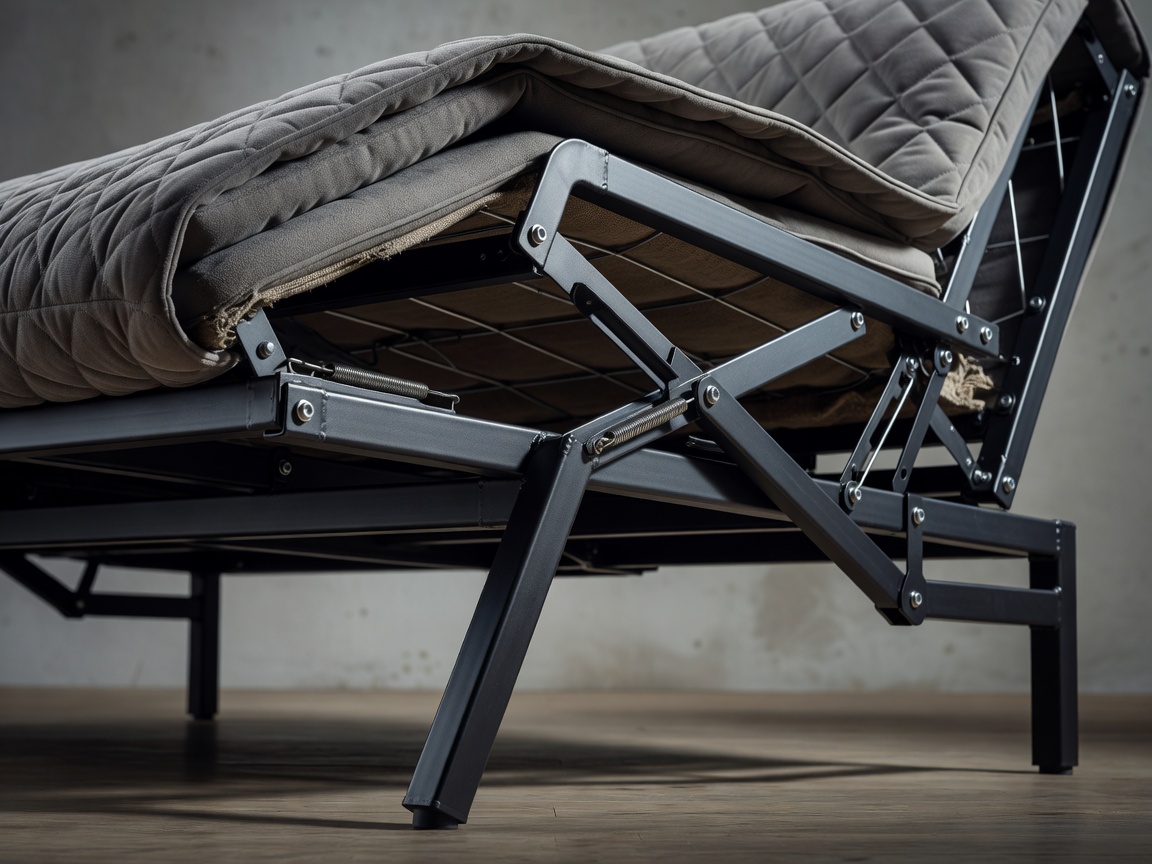
Try the change yourself where a retailer permits it. Watch a demonstration first, then follow the instructions without someone quietly taking the weight for you. Notice whether the movement is controlled, whether a handle is reachable and whether the final position is obvious. Never put fingers near folding joints to investigate a noise or a sticking frame. A mechanism that binds, twists or needs an improvised shove should be assessed by the supplier rather than treated as a normal inconvenience.
In the open position, identify the supporting legs, deck and locks. Check that each required support lands where the instructions say it should. Rugs, uneven floors and a leg close to a threshold can complicate the setup. Do not use improvised blocks or modify the frame to compensate. Ask about replacement mechanisms, mattress compatibility and service access before buying. A repairable cover is useful, but it does not solve an unavailable structural component inside the sofa.
Give the morning reset a home
Opening the bed is only half the routine. Decide where pillows, a duvet and any mattress topper live when the room returns to seating mode. Do not assume that bedding can remain inside a folded mechanism. Follow the manufacturer’s instructions, including any restrictions on mattress thickness and items left on the surface. Extra layers can obstruct closure or place stress on parts that were not designed for them. A dedicated, easy-to-reach bedding location often makes more difference than an especially quick pull-out action.
Let the sleeping surface air as the manufacturer recommends and address any dampness before enclosing textiles. Check the care label for cleaning methods, particularly where upholstery sits close to metalwork. For second-hand purchases, obtain the original model details and assembly instructions where possible; inspect for damage and consult relevant local safety guidance. EN 12520 concerns domestic seating, while EN 1725 concerns beds. A reference to either standard should prompt a specific question about which configuration was assessed, not an assumption that every function has identical evidence.
| Record | Where to check | Why it matters |
|---|---|---|
| Closed width, depth and height | Current model drawing | Everyday seating and delivery planning |
| Fully open footprint and rear travel | Opening instructions | Door access and operating clearance |
| Usable sleeping surface | Mattress specification | Actual sleeping space, not external size |
| Packed component dimensions | Supplier delivery information | Doorways, stairs and turning points |
The final choice is a routine, not a photograph. Prefer the sofa bed whose compromises you can name and accept: a firmer seat, a bedding cupboard nearby or a table that moves easily. If the room cannot accommodate the opening sequence safely, a different furniture arrangement may be more useful than a more elaborate mechanism.